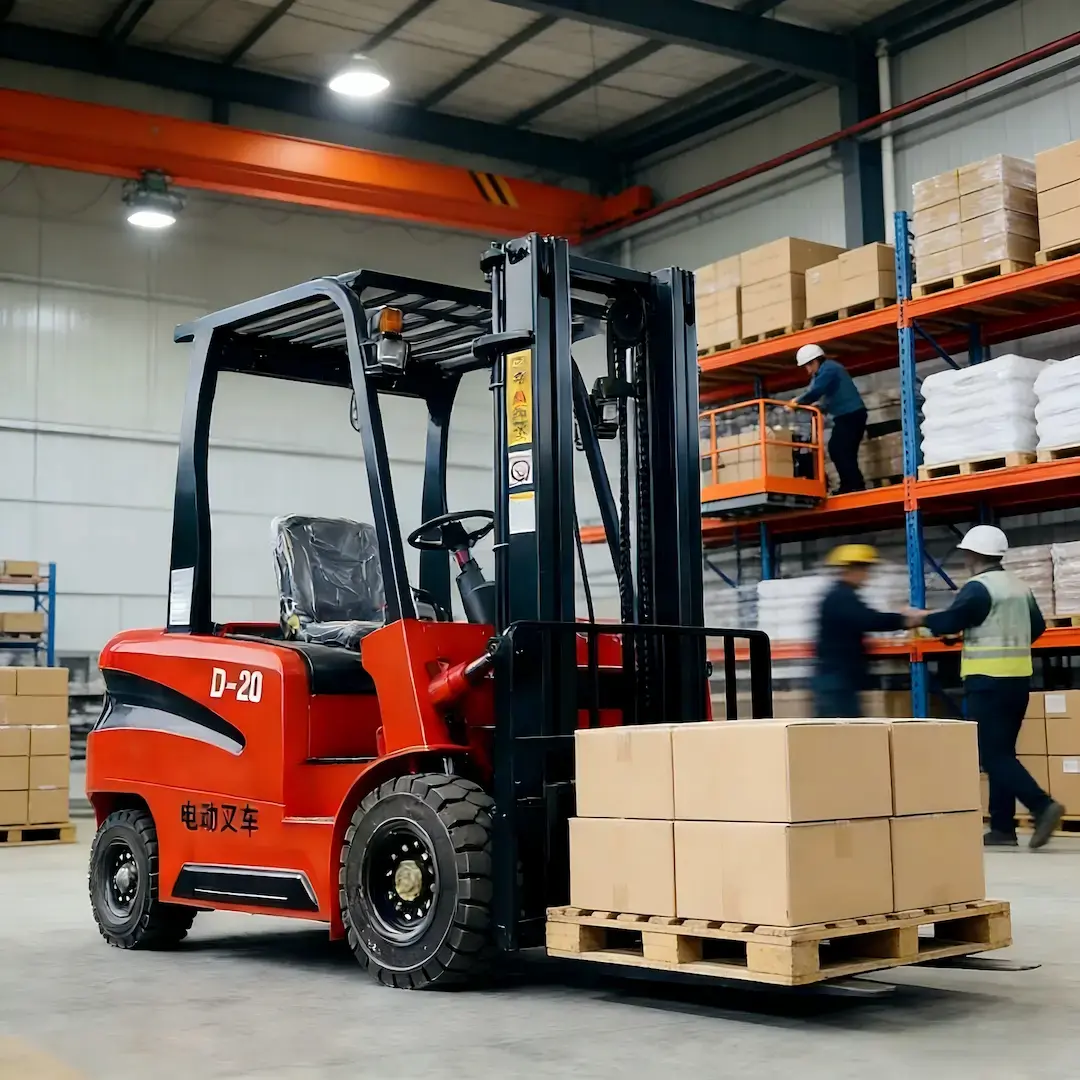
Why Warehouses in the US and Europe Are Switching to Electric Forklifts
Choosing an electric forklift for warehouse operations is not only about "tonnage." For US importers and EU distributors, the right configuration depends on your pallet weight, aisle width, racking height, shift pattern, and safety requirements.

💡 Expert Insight: Electric forklifts typically reduce routine maintenance costs by 30-40% compared to diesel models. They also provide a cleaner working environment.
1. Define Load Capacity & Load Center
Forklift capacity must match your real working condition. Even the same "2 ton" rating can behave differently when the load center changes (e.g., handling long cartons, reels, or bulky crates).
- 1.5 – 2.0 ton: Best for general pallet handling, light manufacturing, and retail distribution.
- 2.5 – 3.5 ton: Ideal for heavier cartons, beverage logistics, and high-frequency dock operations.
2. Confirm Lift Height and Mast Type
Lift height impacts visibility and stability. While 3 meters is standard, many modern warehouses require higher reach.
| Mast Type | Typical Height | Best Application |
|---|---|---|
| Duplex Mast | 3.0m - 4.0m | Standard loading/unloading, low ceiling areas. |
| Triplex Mast | 4.5m - 6.0m | High racking storage, maximizing vertical space. |
3. Choose Battery Type: Lead-acid vs. Lithium
Battery choice affects your charging workflow and long-term TCO (Total Cost of Ownership).
- Lead-acid Battery: A cost-effective choice for single-shift operations. Requires 8-10 hours to charge.
- Lithium-ion Battery: The premium choice for multi-shift warehouses. Supports "opportunity charging" (charging during breaks).
4. Final Checklist Before Ordering
Before you contact the factory, please double-check the following specs to get an accurate quote:
- Capacity: Maximum load weight and dimensions.
- Space: Narrowest aisle width in the warehouse.
- Power: Lead-acid or Lithium battery preference.
- Height: Required mast height for your racking system.