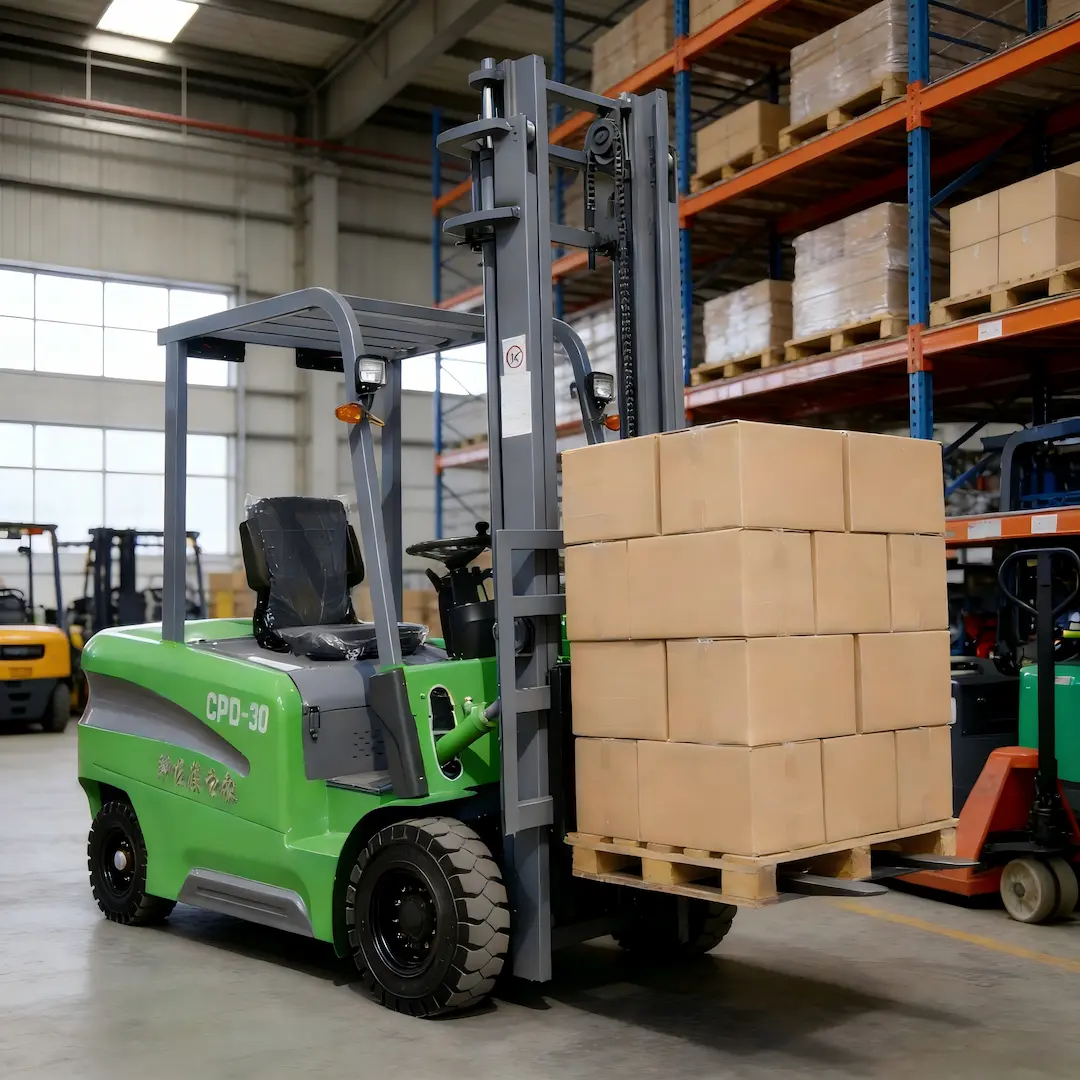
The Importance of Choosing the Right Forklift Capacity
Selecting the correct forklift capacity is one of the most critical decisions for US warehouse operators and European logistics distributors. Buying a forklift with insufficient lifting power risks safety issues, while oversizing leads to unnecessary capital and operating costs.
The right forklift capacity ensures:
- Safe daily operations
- Lower total cost of ownership (TCO)
- Longer equipment lifespan
- Compliance with OSHA and EU safety standards

Understanding Forklift Rated Capacity and Load Center
Forklift capacity is not just about maximum weight—it is calculated based on the load center distance, typically 500 mm (20 inches).
If the load center increases due to:
- Longer pallets
- Irregular loads
- Attachments like clamps or side shifters
The effective lifting capacity decreases.
Example:
A forklift rated at 3,000 kg at a 500 mm load center may only lift 2,400 kg if the load center shifts to 600 mm.
Common Forklift Capacity Ranges for Warehouse Use
| Application Scenario | Recommended Capacity |
|---|---|
| Light retail & small warehouses | 1.5–2.0 ton |
| Standard pallet handling | 2.0–3.0 ton |
| Heavy pallet & industrial storage | 3.0–3.5 ton |
| Large outdoor yard & heavy cargo | 3.5–5.0 ton |
Mistakes Buyers Often Make When Selecting Capacity
1. Ignoring Real Load Weight
Some buyers choose capacity based on estimated weight rather than actual pallet or product weight.
2. Forgetting Attachments Impact
Forklift attachments reduce available lifting capacity due to added weight and load center shift.
3. Buying Too Large “Just in Case”
Oversized forklifts:
- Consume more electricity or fuel
- Cost more upfront
- Require wider aisles
Matching Capacity to Real Warehouse Scenarios
Small to Medium Warehouses (US & EU)
- Recommended: 1.5–2.5 ton electric forklifts
- Best for retail, food distribution, e-commerce fulfillment
Medium to Heavy Duty Operations
- Recommended: 2.5–3.5 ton forklifts
- Suitable for manufacturing, wholesale distribution, and export staging
Outdoor & Mixed-Use Facilities
- Recommended: 3.0–5.0 ton diesel or all-terrain forklifts
- Ideal for construction yards and port logistics
Electric vs Diesel Capacity Considerations
Electric forklifts typically offer:
- Lower operating costs
- Zero emissions (ideal for indoor warehouses)
- Smooth torque delivery
Diesel forklifts provide:
- Higher continuous power output
- Better performance on rough outdoor surfaces
- Faster refueling cycles
Your capacity choice should align with both load weight and working environment.
How Jinli Helps Buyers Choose the Right Capacity
Jinli Machinery supports US importers and EU distributors with:
- Capacity selection consultation
- Load chart analysis
- OEM & private label branding
- Battery and engine customization
- Export-ready packaging & certification
If you share your average pallet weight, lift height, aisle width, and warehouse layout, our engineers can recommend the most cost-effective forklift capacity.
Final Recommendation for Buyers
Choose forklift capacity based on:
- Real daily load weight
- Maximum lift height
- Warehouse aisle width
- Attachment requirements
- Long-term operating cost
Avoid overspending—right-sized forklifts deliver better ROI and safer operations.
Ready to Configure Your Forklift?
Contact Jinli Machinery to receive a custom forklift recommendation for your US or European warehouse, including capacity planning, OEM branding, and bulk order pricing.