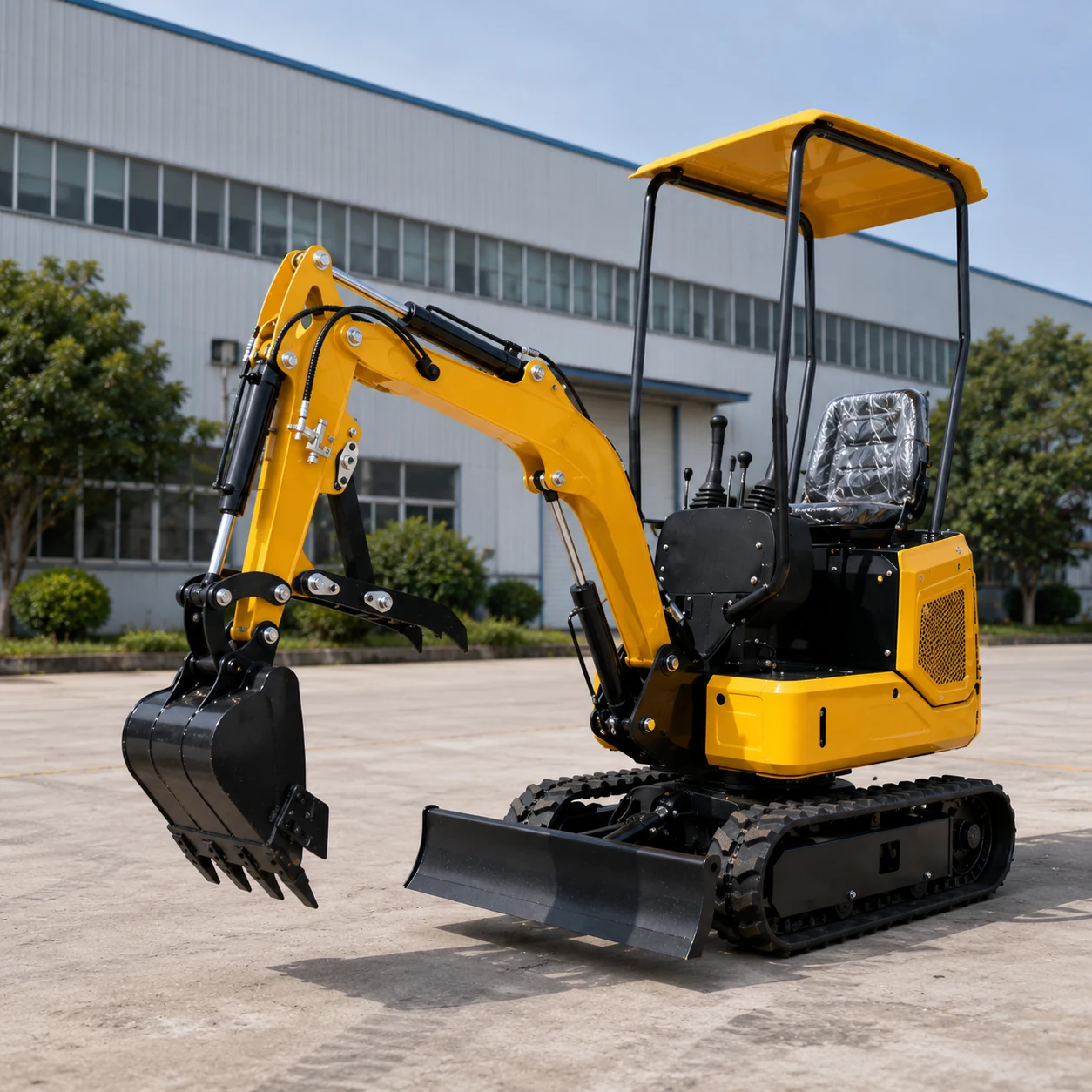
Width Is Usually the First Limit, Not Digging Power
For small contractors, landscapers, and residential buyers, one of the most practical questions is:
Will this machine fit through the gate?
That question is important because a machine that is strong enough for the work may still be wrong for the site if access is tight.
1. Start With Undercarriage Width
When buyers compare compact models like JL-08 or JL-10, they should look at:
- undercarriage width
- track width
- blade width
- whether the machine has retractable track logic
Those numbers matter more than a sales description like “small” or “compact”.
2. Do Not Judge by One Photo
Machines can look narrow in a product photo and still feel different in a real side yard or garden path.
That is why the best approach is:
- measure the gate
- measure the narrowest part after the gate
- think about turning room
- think about trailer access too
In residential work, the path after the gate can be the real problem.
3. Match Access With the Actual Job
If the work is trenching, utility repair, orchard access, or backyard drainage, compact models usually make more sense than jumping straight to a heavier machine.
But if the job also needs higher output, better cab comfort, or bigger attachment use, the buyer may need to trade some access convenience for productivity.
4. The Better Way to Ask for Advice
Instead of saying “I need a small excavator,” send:
- gate width
- narrowest path width
- job type
- target digging depth
- whether you need attachments
That gives a much better basis for model selection.
Final Takeaway
Backyard access questions are normal, and they are often the right place to start.
If you are comparing compact sizes, focus on width first, then match that with the real digging task. A smaller machine that can actually enter the site is often more useful than a larger machine that cannot.