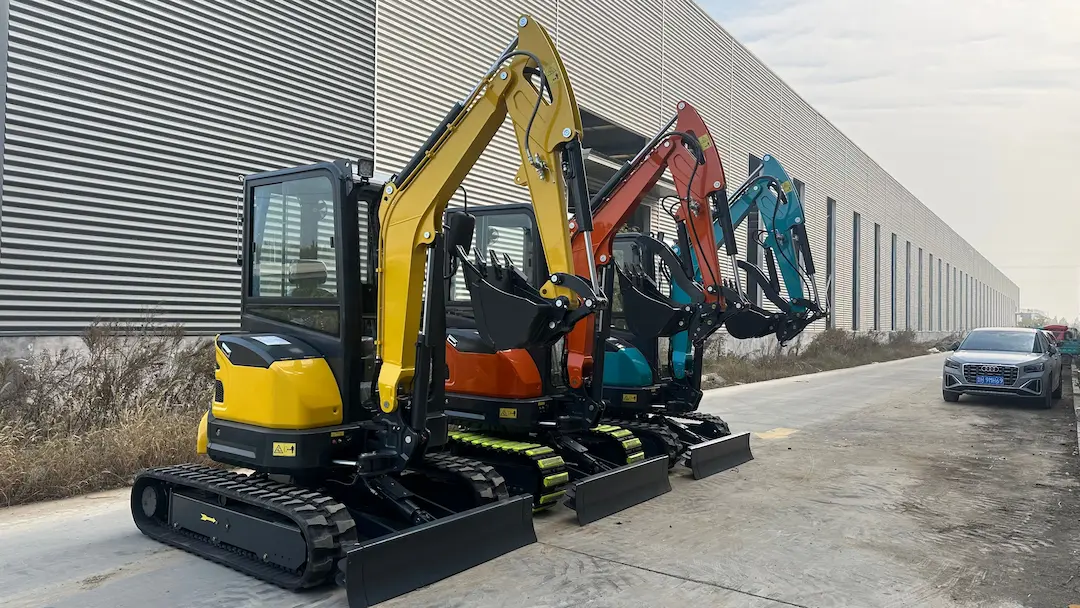
Why Cab vs Canopy Is a Real Sales Question
For distributors and rental-focused buyers, the difference between a canopy mini excavator and an enclosed cab mini excavator is not cosmetic. It affects:
- price positioning
- target customer type
- climate suitability
- shipping and storage planning
- premium upsell opportunity
That is why many buyers compare versions such as Air / Pro / Pro Max instead of looking at only one configuration.

Where Canopy Models Usually Win
Canopy versions often work well when the market needs:
- lower entry pricing
- simpler structure
- lighter operating weight
- easier visibility for some job types
- compact access without premium-cab cost
Typical buyers:
- landscaping contractors
- utility trenching teams
- farm and orchard users
- first-time importers testing a market
- dealers building a price-sensitive entry lineup
If your customer mainly values affordability and simple maintenance, canopy units are often the fastest-moving models.
Where Cab Versions Usually Win
Cab versions usually make more sense when buyers need:
- better weather protection
- stronger premium positioning
- higher comfort for long workdays
- better sealing in dusty or cold environments
- more complete contractor specification packages
Typical buyers:
- municipal contractors
- utility crews working all year
- buyers in colder regions
- rental fleets targeting premium demand
- dealers who want a higher-margin version in the lineup
Cab versions are often easier to justify in markets where operator comfort directly affects buying decisions.
How Dealers Usually Build the Version Ladder
A practical lineup might look like this:
Entry Version
- canopy
- simpler hydraulic setup
- most price-sensitive
Mid Version
- upgraded hydraulics
- improved engine or cooling
- same general frame but better working capability
Premium Version
- enclosed cab
- stronger hydraulic package
- premium engine or comfort features
This kind of structure helps the sales team explain the difference clearly without changing to a completely different machine family.
What to Ask Before Choosing the Stock Mix
Before you decide how many cab or canopy units to bring in, ask:
- Are your buyers mostly landscapers, municipal contractors, or rental fleets?
- Do they work in open seasonal weather or all-year conditions?
- Is the market more sensitive to upfront cost or operator comfort?
- Are you trying to maximize unit turnover, or increase margin per machine?
- Will attachments and hydraulic options matter more than the cab itself?
These questions usually tell you more than copying a competitor’s stock list.
Cost Positioning Matters
From a dealer point of view:
- canopy models often help bring in more inquiry volume
- cab models often help increase average deal value
That means both can be useful, but not in the same role.
In many regions, the best strategy is:
- stock canopy versions as entry and volume units
- stock selected cab versions as premium upsell units
This gives buyers a clear step-up path without making the lineup too complicated.
Good Sales Positioning for Each Version
Canopy Positioning
- easier entry price
- practical for landscaping and farm work
- suitable for standard contractor jobs
Cab Positioning
- premium contractor solution
- better all-weather operation
- better long-shift comfort
- stronger image for fleet and municipal procurement
If you present the versions this way, buyers understand the decision much faster.
What Jinli Can Help You Compare
For dealers choosing between canopy and cab stock, Jinli can help clarify:
- which model classes should stay canopy-first
- which premium versions should carry a full cab
- which attachment package fits each version
- how to structure the version ladder for dealer catalogs
- how to build a mix that balances turnover and margin
Related Jinli Version Pages
You can compare real version layouts on:
- JL-12 Series Mini Excavator for compact Air / Pro / Pro Max structure
- JL-18 Series Mini Excavator for a stronger contractor-ready mid-size option
- JL-35 Series Mini Excavator for larger premium cab positioning
If you want help planning your mini excavator version mix for the US or Europe, send your target customer type and preferred tonnage range. We can suggest a more practical stock structure before you place an order.