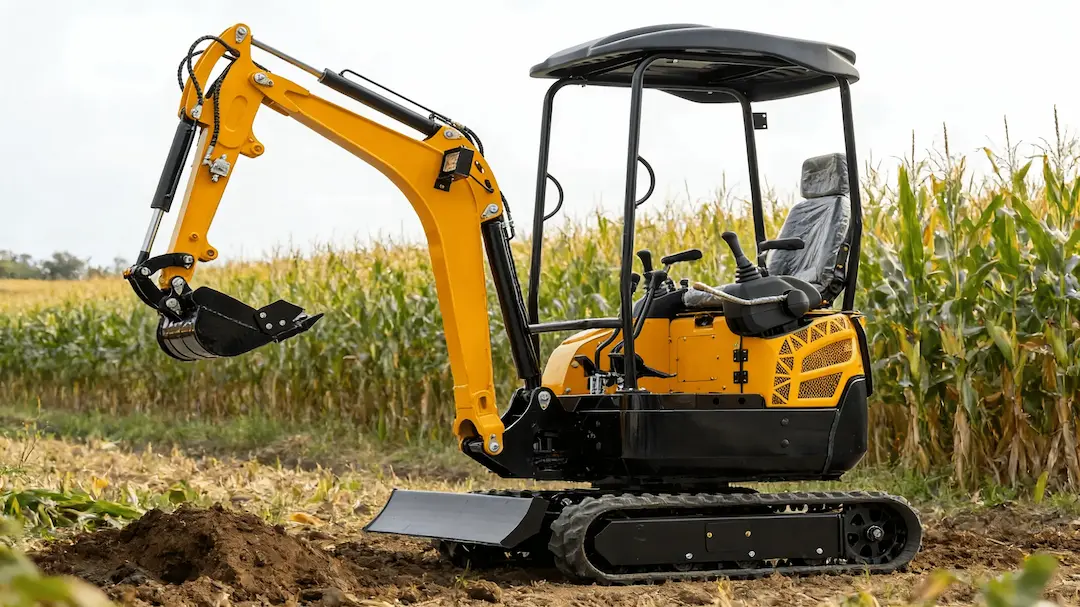
Farm Buyers Usually Want Versatility First
Orchard and farm customers often ask for one machine that can handle several jobs:
- trenching
- clearing roots
- small foundation work
- drainage
- fence and auger jobs
That is why the best machine is not always the biggest one. It is usually the one that matches both the land and the attachment plan.
1. Start With Access and Ground Conditions
In orchard and farm work, tight movement and uneven ground matter a lot.
Compact models such as JL-10 and JL-12 are easier to place where:
- row spacing is limited
- access roads are smaller
- the machine must move between trees, structures, or greenhouse areas
2. Think About Attachments Early
Attachment choice changes the real usefulness of the machine.
For farm and orchard buyers, common add-ons include:
- auger
- rake
- ripper
- tilt bucket
- quick hitch
If attachments are part of the plan, they should be discussed before the quote is finalized. That way the machine and package can be evaluated together.
3. Cab or Canopy?
This depends on the market and working season.
A canopy version may be enough for lighter seasonal work, but a cab version becomes more valuable if the buyer expects longer working hours, more weather exposure, or more commercial use.
4. Do Not Ignore Service Simplicity
For farm buyers, simple service access can matter as much as headline spec numbers.
If the machine will be used regularly but supported far from a city workshop, buyers usually care about:
- filter availability
- hose replacement
- simple maintenance routines
- easy attachment support
Final Takeaway
The best orchard or farm excavator is usually the one that combines compact access, the right attachment package, and manageable maintenance.
If you already know the land conditions and the main jobs, it becomes much easier to narrow the right model range.
If attachments are part of your plan, see Best First Attachment Package for Mini Excavator Buyers for how to prioritize them.